Chile's Environmental Evaluation Service published a criterion that guides how data centers are evaluated in the SEIA and when they must enter the system on a mandatory basis. We explain it step by step: project types, entry thresholds, permits and impacts.
The growth of artificial intelligence and cloud services has made Chile an attractive destination for data centers. That boom raised a recurring question: how are these projects evaluated from an environmental standpoint, when they did not fit any traditional category in the system? The Environmental Evaluation Service (SEA) set out to answer it. In this note we explain, in plain language, what it published, whom it affects and what is worth keeping in mind.
What the SEA published
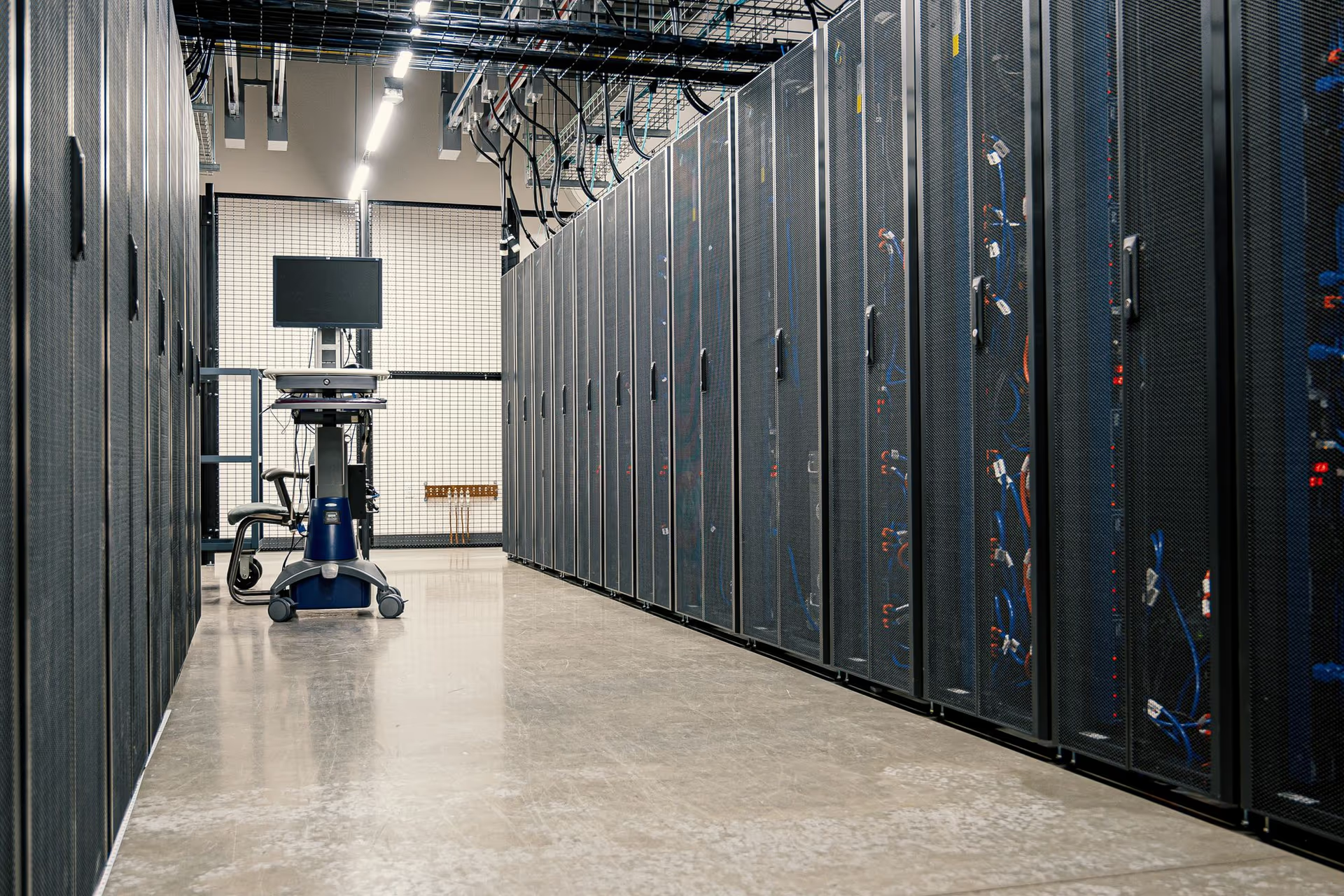
On January 20, 2026, the SEA’s Executive Directorate issued an Evaluation Criterion on data center projects, in line with the National Data Center Plan 2024-2030. The document provides a general introduction to this type of project: it describes their components, works and equipment, the environmental impacts they can generate and some considerations for prevention and emergency plans. In practice, it is a guide that unifies how the SEA will approach these projects within the Environmental Impact Evaluation System (SEIA), governed by Law No. 19,300 (Ley N° 19.300) and administered by the service created by Law No. 20,417 (Ley N° 20.417).
No single category: evaluation is case by case
The starting point is important. A data center has no entry category of its own under the SEIA. Its evaluation is therefore carried out case by case, looking at the parts, works and actions that make it up. The guide helps organize that analysis and makes it possible to (i) determine whether the project must enter the SEIA, (ii) identify the environmental permits that could apply to it and (iii) anticipate the factors that would generate impacts.
When entry into the SEIA is mandatory
The guide describes, for guidance purposes, the conditions that usually trigger entry. Two are especially relevant:
- Associated electrical infrastructure. If the project includes power transmission lines with a voltage above 23 kV and more than 2 kilometers in length, or emergency and backup generator sets exceeding 3 MW of capacity.
- Handling of hazardous substances. For example, the production, disposal or reuse of flammable substances in certain quantities, or their storage in volumes equal to or greater than 1,000 tonnes (having in mind, among other things, the fuel for backup generators).
If either of these conditions is met, the project must undergo environmental evaluation before being executed.
Permits and impacts
The guide includes an indicative list of the sectoral environmental permits (Permisos Ambientales Sectoriales, PAS) that could apply and the circumstances that would justify obtaining them. It also identifies, for reference, the impacts a data center can produce at its different stages (construction and operation), which will depend on the territory and the environmental characteristics of the surroundings: water and energy consumption, noise, generator emissions and waste management, among others.
When it takes effect
The guide entered into force with the publication of its abstract in the Official Gazette (Diario Oficial) on February 25, 2026, and is mandatory for projects entering the SEIA after that date. Projects already under evaluation may apply it on a voluntary basis. This criterion is complemented by the amendment to the SEIA Regulations published on January 21, 2026, which is part of the same effort to give clear rules to an expanding sector. The full document, “Criterio de evaluación en el SEIA: introducción a proyectos de data center” (Evaluation criterion in the SEIA: an introduction to data center projects), can be consulted in the official text of the criterion (PDF) and in the news release from the Environmental Evaluation Service.
The decisive factor: communities
Beyond permits and technical thresholds, the viability of a data center increasingly turns on its relationship with the territory and the communities that surround it. These projects demand water and energy in significant quantities, resources that are often sensitive for the localities where they are sited. When a data center competes for the water of an area under water stress, or puts pressure on the local power supply, the conflict stops being environmental and becomes social.
The SEIA itself recognizes that dimension through citizen participation, which allows people and organizations in the territory to become informed and submit observations on the project. And when the location may directly affect indigenous communities, the indigenous consultation under ILO Convention 169 comes into play, a good-faith dialogue process that is not a mere formality. Ignoring these stages, or addressing them late, is one of the main causes of projects ending up in court or being brought to a halt.
For anyone planning a data center, the message is therefore clear: it is worth analyzing early whether the project will have to enter the SEIA and which permits it will need, but also designing serious community engagement from the outset, transparent and sustained over time. The environmental license is obtained from the authority; the social license is built with the communities, and without the latter no project is truly viable.
In our Environmental Law and Community Relations practice we pay special attention to the communities, neighbors and organizations of the territory that live alongside these projects and that, in many cases, face companies with large legal teams. We help them understand what a project involves, exercise their right to participate in the SEIA and submit observations, demand that the indigenous consultation be respected where applicable, and negotiate fair agreements that protect the water, the territory and their way of life. Digital infrastructure can coexist with communities, but only if they have a voice and real support.
This article is general and informational in nature and does not constitute legal advice for a specific case. The legislation cited should be verified in its current version before making any decisions.