
Legal analysis

Publications

Analysis of legal trends, case law and regulatory change in Chile, written in plain language for international clients.

Topic
Type

An empty office in dim light, with desks, chairs and filing cabinets in place and nobody at work

No activity does not mean no assets: ex officio business closure and its limits before Chile's SII

Chile's tax authority has again declared the closure of taxpayers that record no transactions. But dormancy, the tax position of a company's assets and the dissolution of the company itself are separate questions. We explain what the SII may presume, what evidence allows a taxpayer to contest it, and what a business should check before treating the matter as closed.

Close-up of a bunch of metal keys on a dark surface

Handing AI the keys to the business: autonomous agents, permissions and liability in Chile

This week saw the launch of a service in which AI agents continuously test the security of its customers' systems. Days earlier, a lab showed an agent replacing the very model it was supposed to maintain, without anyone asking it to. We look at how Chilean law allocates authorization, control and liability when AI acts on a company's systems.

Wooden post of a rural fence strung with barbed wire, over a grassy paddock lit by the late afternoon sun

The promised plot: assignments of land rights and the limits of regularization before Bienes Nacionales

A deed, a percentage and a fenced plot do not answer the underlying question: what was actually acquired? This analysis separates the reach of an assignment of rights, its use as a basis for regularizing title before Bienes Nacionales, and the limits an irregular subdivision imposes.

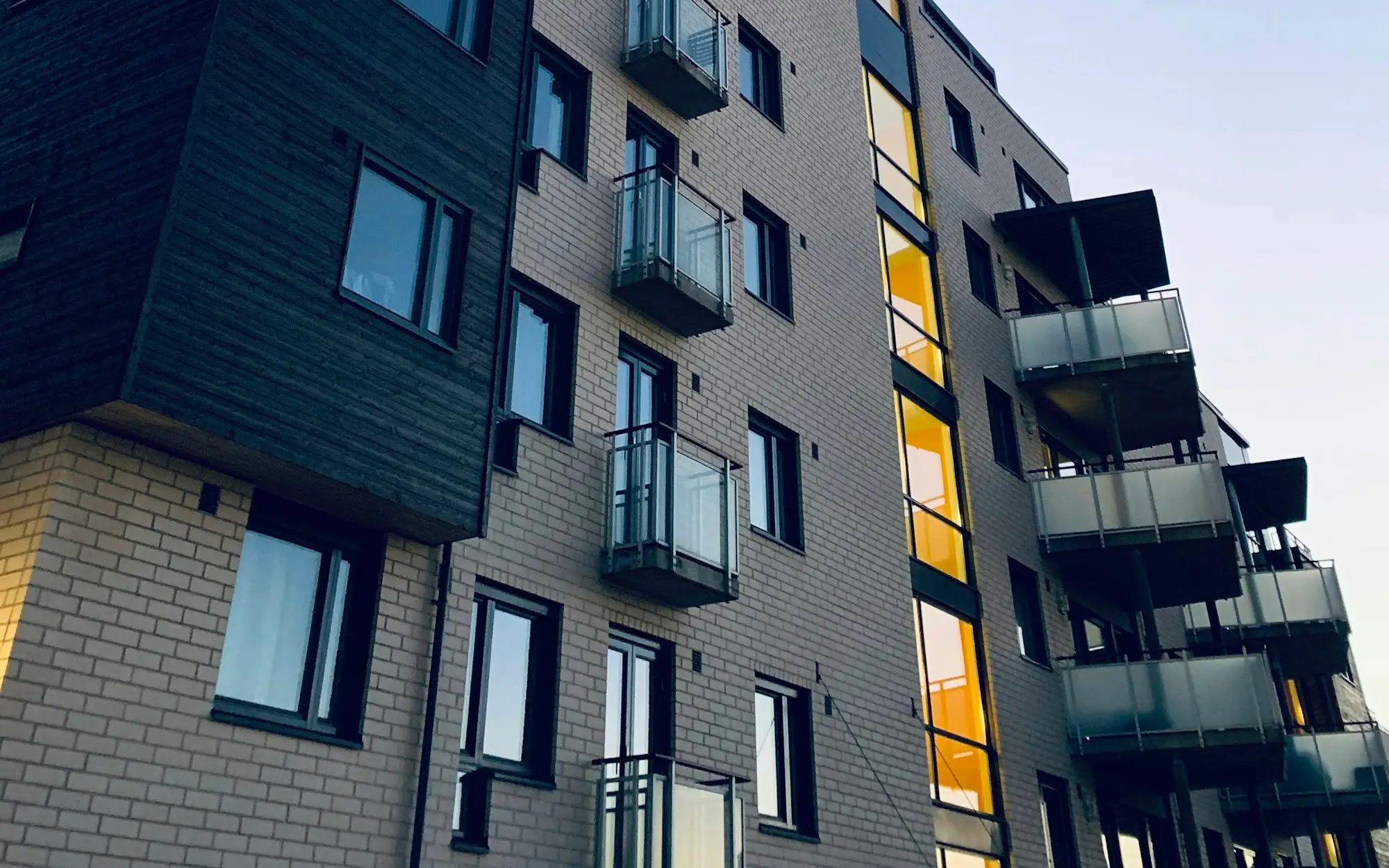
Facade of a new residential building, with dark timber cladding, light brick and balconies, under a clear sky

Homes without VAT, no property tax after 65? What Chile's Reconstruction Law really changes for buyers, landlords and older homeowners

Chile's Reconstruction Law carries four measures that hit the property sector head-on: a VAT exemption on new homes, a 5% flat tax on rentals of so-called economic housing (DFL 2), the end of property tax on the main home of owners aged 65 and over, and a corporate tax cut. Their real scope, their requirements and their deadlines, separating the headline from the fine print.

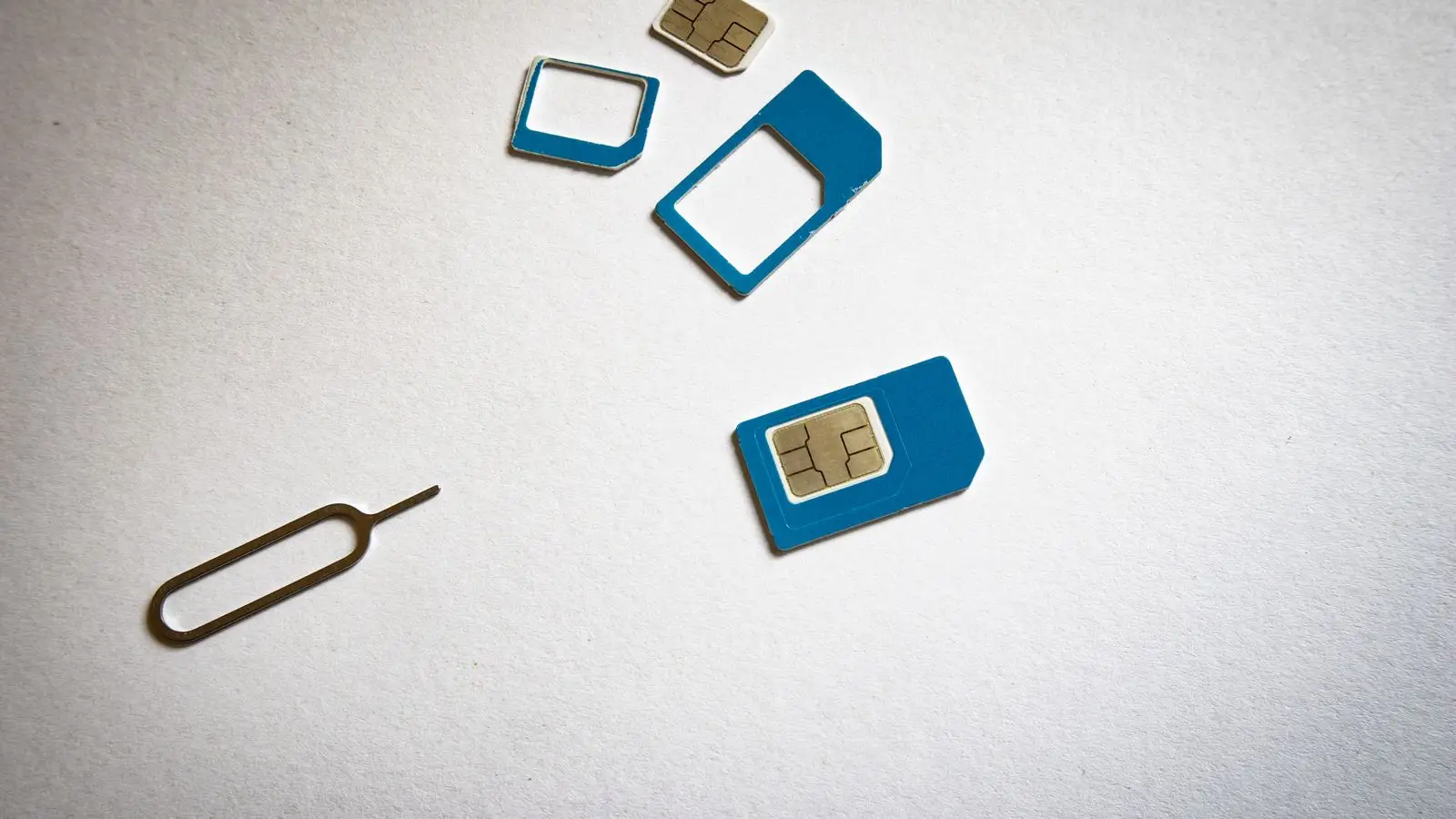
A blue SIM card beside its adapters and the tray ejector pin, on a white paper surface

They took the SIM and emptied the account: what should you do, and who answers for it?

The phone goes dead for no reason and, when service comes back, the alerts arrive all at once: transfers, cash advances, sometimes a consumer loan nobody asked for. It is called SIM swap, and it has two possible defendants: the bank that never stopped abnormal activity, and the carrier that handed over the line without checking who was asking. What to do in the first hours, and what to demand in writing.

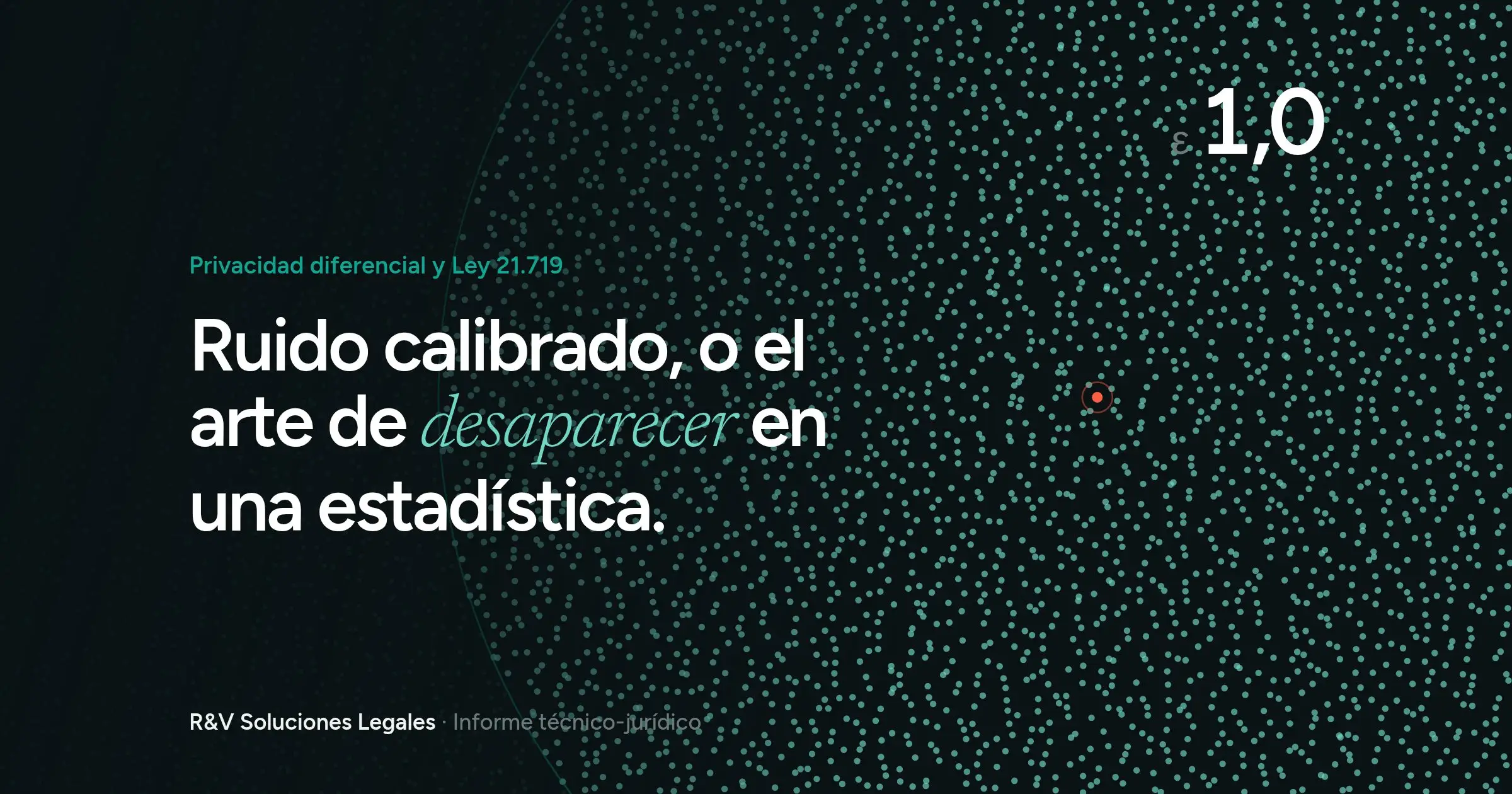
Cover of the report: the document's own dot-field graphic, a teal population on a dark background with an orange dot inside the epsilon circle, next to the Calibrated Noise headline

Calibrated noise, or the art of disappearing into a statistic

A technical and legal report on anonymization and differential privacy under Law No. 21,719. The statute requires an irreversible procedure before data ceases to be personal, and no known technique removes residual risk: the operative question is what you would have to be able to prove, and with which document, when someone asks in writing. It distinguishes throughout between what the statute says, what the technical evidence shows and what is the author's own view.

A person signing a document at a wooden table in an office

Renegotiate or liquidate: which path applies when the debts can no longer be paid?

Chilean law provides two distinct procedures for over-indebted individuals: an administrative one before the Superintendency and a judicial one. Most inquiries start with how to file, when the useful question comes first: which of the two applies to this case? This guide explains how to tell them apart, what changes when a lawyer handles the filing, and includes a self-assessment tool to place your own case.

Brass hourglass on a dark wooden table, most of its sand still resting in the upper bulb

Three windows, three clocks: Chile's Reconstruction Law and the deadline nobody can date yet

Chile's Congress has cleared a sweeping tax bill. Three transitional windows for private wealth close within months, and none of their clocks has started. Every rule below is cited to its exact article of the approved text.

A person holding a bank card while working on a laptop computer

The victim as defendant: what does Chilean law owe you after bank fraud, and what will your bank try instead?

A transfer nobody authorized. A withdrawal nobody made. Chilean law gives the cardholder a fast refund on a short clock, and this year the Supreme Court has held the line even where the customer handed over the codes. The fight has moved elsewhere: to the courtroom where the bank sues the customer.

A person running figures on a calculator and writing them onto a paper worksheet

How much does the employer contribution rise in August? The payroll math to do before the next run

From the August 2026 payroll the employer's pension contribution reaches 3.5%. A month earlier, collection of unpaid contributions was centralized and the Treasury took over the pre-litigation stage. Together they change the price of an oversight most companies discover far too late. How much does it actually rise, and what should be checked now?

Financial newspaper pages showing share price tables, exchange rates and interest rates

The tax authority shows its hand: Chile's new valuation framework and what taxpayers will have to prove

In October Chile's tax authority publishes the methodology it uses to arrive at market values in audits. It says the document breaks no new ground, that it simply writes down criteria already in use. Which raises the question it does not answer: if they were already in use, from when are they enforceable?

Close-up of a screen with rows of binary code, white zeros and ones on a black background

Artificial intelligence enters the State's data: mass data analytics platforms under Chilean law

The advance of artificial intelligence created a new generation of platforms that integrate and analyze data at large scale, such as those of Palantir, now offered to governments, municipalities and companies. What conditions has comparative law set for them? What does Chile's legal order in transition require? And what must be settled in writing before signing?

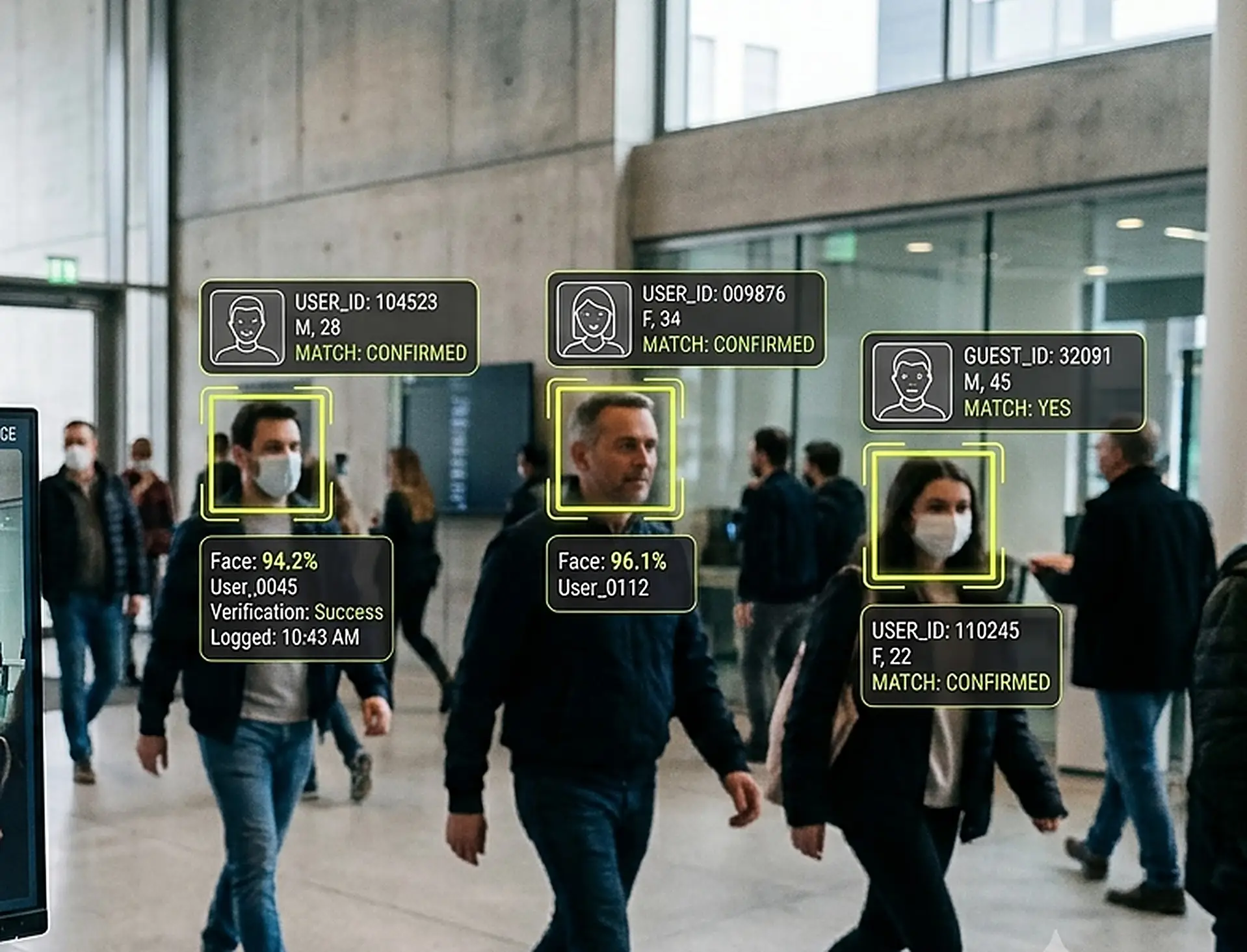
Facial recognition system identifying several people in a lobby, with detection boxes over their faces

The face turned into sensitive data: facial recognition and video surveillance under Law No. 21,719

Law No. 21,719 turns facial features into sensitive personal data, while municipalities and institutions expand video surveillance with artificial intelligence and the new Personal Data Protection Agency is not yet established. An analysis of the Chilean framework, comparative experience and the obligations facing institutions, companies and individuals.

Aerial view of rural land divided into parcels

The Ministry of National Assets overhauls its rules: Ministerial Order No. 2/2026

The Ministry of National Assets issued Ministerial Order No. 2/2026, which reorders the administration and allocation of State-owned real estate, updates the regularization of small property titles and repeals fourteen earlier orders. What changes and what it means for possessors and companies?

Professional signing a document on a tablet with a digital stylus

Advanced electronic signatures: the bill that seeks to reduce in-person formalities

A new bill modernizes the advanced electronic signature, introduces time stamping, and allows certain notarial certifications to be replaced and electronic promissory notes and bills of exchange to be issued. What does it propose and what are its implications?

Fiber optic panel in a data center

Cybersecurity: ANCI expands the list of Vital Importance Operators

Chile's National Cybersecurity Agency published the second preliminary list of Vital Importance Operators, adding hundreds of entities to the enhanced regime of Law No. 21,663. Which sectors does it cover, which deadlines have already expired and what obligations does it entail?

Aisle of server racks in a data center

Data centers under Chile's SEIA: what the new evaluation criterion requires

Chile's Environmental Evaluation Service published a criterion that guides how data centers are evaluated in the SEIA and when they must enter the system on a mandatory basis. We explain it step by step: project types, entry thresholds, permits and impacts.

Football on the grass of a stadium

Online betting and the World Cup: the prize the law does not oblige anyone to pay

During the World Cup the betting apps market themselves as just another service, but the Chilean bettor plays from a fragile legal position: if they win, they have no way to demand payment, and the recent VAT charge by the SII does not change that diagnosis.

Signing legal documents relating to property titles

Opposing a small-property title regularization (D.L. 2.695)

What opposing a regularization involves, the avenues for challenging one, and the procedural and substantive defenses, with the current legislation and the criteria of the higher courts.

Information security and data protection in the company

Computer crimes and cybersecurity: key points for your company

A practical analysis of Law No. 21,459 on computer crimes and of the new cybersecurity framework regulation, and how they impact risk management, technology contracts and corporate criminal liability.

Rural land undergoing property title regularization

Regularization of small property titles and state-owned land in Chile

A guide to the title regularization procedure under Decree Law 2,695 (D.L. 2.695), the role of the Ministry of National Assets, and the main stages, deadlines and requirements that possessors face.

Documents and calculation of tax debts owed to the SII

Statute of limitations on SII and Tesorería collections: the 3-year and 6-year periods

A clear explanation of the ordinary (3-year) and extraordinary (6-year) limitation periods under Articles 200 and 201 of the Chilean Tax Code, the grounds that interrupt them, and defense strategies in tax collection lawsuits.

Subscribe

Get our analysis

We write when we publish: regulatory change, rulings that shift a criterion, and practical guides. No third-party advertising.